Sunlight hit the studio wall and I remember tracing the outline of a back piece in my head – the idea of a traditional full body tattoo felt simultaneously terrifying and magnetic. I kept flipping through these inspiration boards late at night when I should have been sleeping, imagining how patterns could wrap and connect across skin like a living map. I’m sharing this collection because I want you to see how pieces talk to each other – and to show that a traditional full body tattoo can be bold, delicate, or wildly unexpected.
I learned a lot sitting through my own sessions and watching friends finish sleeves; some of these pins remind me of those tiny decisions that later feel huge. My note-taking habit got out of hand, but that chaos is useful – it helped me figure out which elements I wanted to repeat and which to avoid. Below you’ll find 41 handpicked visuals and short thoughts that might help you imagine your own cohesive look.
You’ll get design ideas, practical vibes about flow, and a few real-life moments from people who lived through long tattoo projects – including one tiny detour where I almost quit, wait, actually… I ended up adding another session. Save the ones you love and share with your artist.
These 41 Traditional Full Body Tattoo Inspirations That Make You Rethink Placement
Legs-in-Legging Vibe
I like how this mixes visible leg work with everyday clothes – it feels wearable even when you’re not showing everything. If you want a traditional full body tattoo that reads differently depending on outfit, this is a good reference.
Bench-Side Casual
This one gives me relaxed, candid energy – the kind of placement that looks accidental but is actually really intentional. Imagine the design flowing from arm to torso for a unified full piece.
Back-Cover Story
Big back pieces are the backbone of many traditional full body tattoo plans; you can anchor motifs here and repeat them elsewhere. I’ve sat through a back session and the patience pays off – the symmetry is so worth it.
Mirror Moment
Seeing yourself in a mirror right after a session is weirdly powerful – this image nails that immediate reward. Think about how pieces look from both front and back before committing.
Sitting In Shadow
I adore the contrast here – dark background, bright skin art. Use negative space like this when planning how a traditional full body tattoo breathes on your form.
Wooden Wall Contrast
This one shows masculine placement across chest and back with warm wood behind it – the pairing helps me imagine texture. If you lean toward bold shapes, this kind of contrast sells the scale well.
Dragon Arm Flow
Dragons are classic connectors between chest, arm, and leg elements in a traditional full body tattoo plan. I once watched an artist turn a dragon into a pathway across ribs and it was mesmerizing.
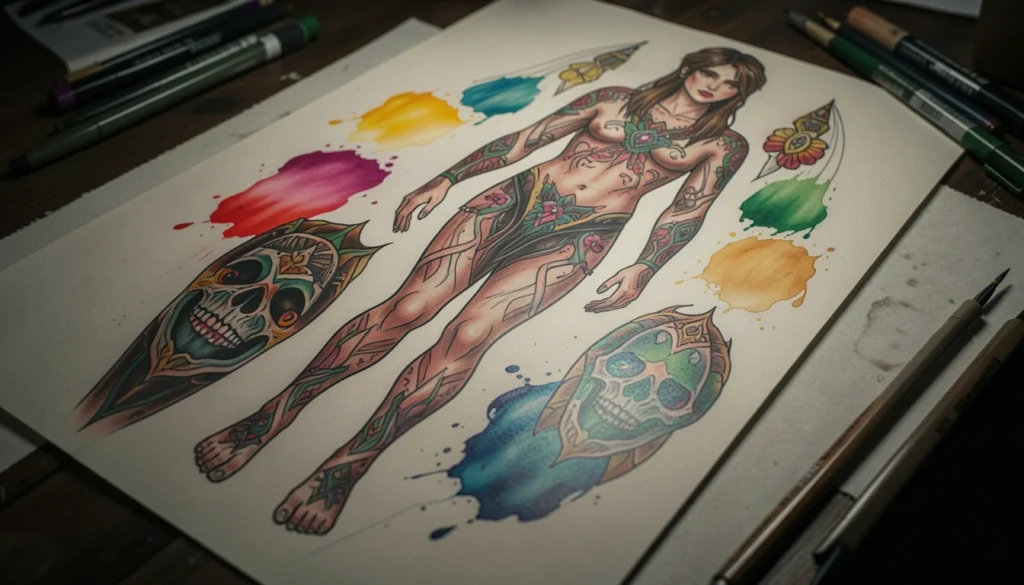
Inked Drawing Style
A drawn reference like this is perfect for working with your artist on line weight and shading. Try bringing sketches when you want the tattoos to feel cohesive rather than a dozen separate pieces.
Classic Chest Presence
Chest pieces can anchor a full body narrative by creating a strong center. When a motif sits here, it gives other areas permission to be smaller or more detailed.
Tattooed Selfie Energy
This photo feels lived-in and fun – not everything has to be museum-level serious. If you plan a traditional full body tattoo, include a few pieces that make you grin when you look in the mirror.
Paper Study Detail
Detailed paper work like this helps with translating fine-line elements to skin without losing character. I keep a little folder of sketches for ideas I might add later.
Bench Headphones Calm
The chill pose shows how tattoos can be part of everyday life rather than performance. Consider how a traditional full body tattoo looks in movement and while relaxed.
Wine-Glass Attitude
Here’s sass and sophistication combined with arm work that’s simple but striking. A small, confident motif can balance larger pieces elsewhere.
Legs and Lines
Leg tattoos are great for elongating a visual story down the body. In a full plan, use recurring symbols to tie leg work to chest or back elements.
Stomach Chest Pairing
This photo shows a midline composition that works well for symmetric designs. Think about rhythm – repeating curves can lead the eye naturally across your torso.
Two-For-One Connection
Seeing two people together with complementary pieces made me want a twin-theme at one point. You can mirror elements across sides of the body to create balance.
Minimal Chest Focus
A small chest motif can be the seed for a future traditional full body tattoo plan without committing immediately. I once did this and added sleeves years later.
Generational Ink
An older couple with tattoos reminds me that body art ages with us in beautiful ways. Let your long-term path influence placement so it still reads nicely decades from now.
Gallery Back Piece
A back piece displayed like art suggests planning and curation. When you want a true traditional full body tattoo, visualize gaps and how future additions will fit.
Brick-and-Chest Drama
Texture behind the subject draws out the tattoo shapes, which is helpful for imagining contrast. Use background textures in your moodboard to test visibility.
Dragon Back Motion
The way the dragon coils across the back here is a textbook example of movement in a traditional full body tattoo. Motion keeps large pieces from feeling static.
Shirtless Simplicity
Sometimes less is more – clean chest pieces can make an entire body plan look elegant rather than cluttered. I admire restraint in a full composition.
Bedtime Ink
Casual, private photos remind me tattoos are for living, not staging. Pick areas you love seeing in the mirror every morning.
Sunlit Contour
Light shows how shading reads on form – this helps if you’re deciding blackwork versus color. Try lighting tests with temporary stencils before longer sessions.
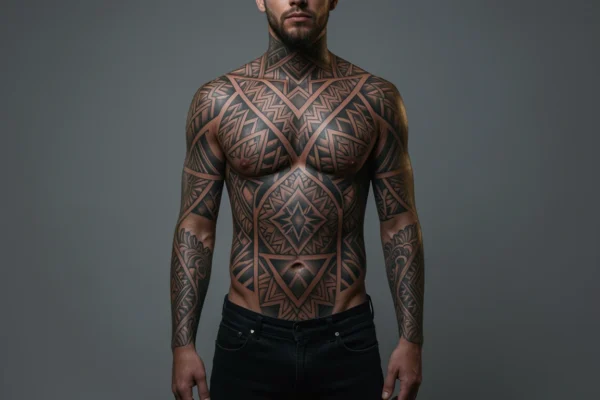
Dense Brick Coverage
A torso filled with ink demonstrates commitment and coordination across sessions. If you want a traditional full body tattoo, plan milestones so you don’t burn out.
Wall Art Inspirations
Seeing framed tattoos on a wall gives design ideas you might adapt to skin. I keep a Pinterest board just for compositions like this.
Stoic Pose
A strong, centered chest piece anchors the gaze and suggests how to balance heavy elements. Consider symmetry if you’re designing a large traditional full body tattoo.
Armchair Confidence
A comfy pose and visible arm work feel approachable – not everything needs to be maximalist. Start with something that makes you feel a little braver each session.
Street-Style Movement
Outdoor shots help you see tattoos in real life, with clothes and motion. When planning a traditional full body tattoo, think about how pieces interact when you walk or stretch.
Beach Reveal
Beach photos give perspective on large torso pieces in sunlight and casual settings. I once tested a mock-up in swimwear before booking a long session and it helped.
Group Dynamics
Seeing multiple people with tattoos together shows range and personality choices. You might borrow motifs from friends while keeping your plan unique.
Checkered Back Rhythm
Patterned pants plus back tattoos create visual echo that appeals to me. Match patterns subtly across clothing and ink for a curated aesthetic.
Full-Back Texture
Texture and layered shading on the back can guide future additions across shoulders and arms. Think of the back as a canvas with natural hills – tattoo flow should respect that.
Waterfront Ink
Wet skin looks different and often intensifies color – a fun thing to keep in mind. If you love a certain palette, test it in different lighting before committing.
Train-Station Edge
Urban backdrops give a gritty vibe that suits bold linework. You might lean into that energy if your tattoo story is about rebellion or travel.
Chest-Focused Presence
Strong chest pieces like this can become the central hub for arm and neck connections. Plan connectors early if you think you’ll expand.
Arm-Leg Coordination
Linking arm and leg motifs with shared symbols creates visual dialogue across the body. I used a small repeating motif across my first few pieces and it surprisingly tied everything together.
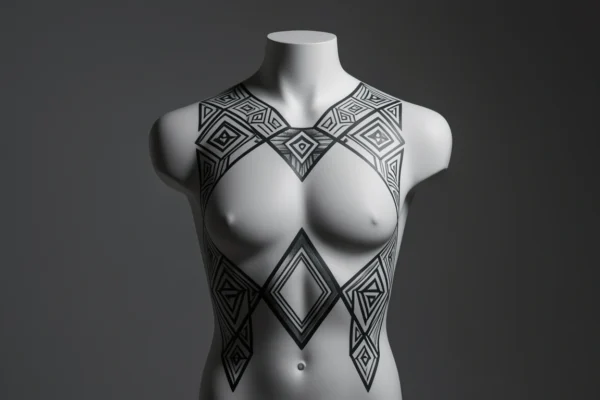
Mannequin Reference
A mannequin shot is a reminder to think three-dimensionally when designing wrap-around work. Try tracing the contour of limbs on paper to map out flow.
Single-Arm Accent
A focused arm piece can be a glorious starting point that doesn’t demand total commitment. Start small and let a traditional full body tattoo evolve if you enjoy the process.
Cutout Play
Using paper cutouts for concept play is underrated – it helps test placement live on skin. Take pictures of temporary placements; they often reveal awkward joins you wouldn’t notice otherwise.
Seated With Back Turned
This quiet moment captures how tattoos look in everyday posture, not just posed. Consider natural positions when plotting a traditional full body tattoo so joints and folds don’t distort key motifs.
How to Actually Make This Work For You
Start by treating your body like a map – pick one anchor piece (usually chest, back, or a large thigh panel) and plan paths from it to other areas so the tattoos feel intentional, not like separate projects. Talk openly with your artist about texture, negative space, and which motifs you want repeated; a short test session or temporary stencil can prevent costly mistakes later. Pace yourself emotionally and physically – long-term projects are marathons, not sprints – set realistic session goals, budget for touch-ups, and remember that patience tends to reward you with cohesion and richer shading.
Frequently Asked Questions
It honestly varies widely – many people take years to finish a full plan because sessions, healing, and finances all factor in. Plan for multiple seasons and pace yourself so you don’t burn out emotionally or physically.
You can collect references and sketch ideas, but a skilled artist is crucial for translating things to skin and ensuring flow. Think of yourself as a creative director and your artist as the technical expert.
Long sessions mean several hours under the needle, breaks, swelling, and aftercare – bring water, snacks, and comfy clothes. Your artist will give specific healing instructions and likely schedule touch-up appointments if needed.
Repeat small motifs, match color or blackwork styles, and plan connector pieces to bridge gaps. If you’re not sure, ask your artist to sketch a mock layout showing how pieces will link over time.
Thanks for scrolling all the way through – I hope these 41 pins sparked an idea or gave you permission to plan slowly. If one of these designs made you pause, save it and show your artist next time you talk placement – trust me, they’ll love having a clear starting point. Tell a friend who’s been thinking about big work and maybe plan a studio visit together; I did that once and it changed everything for me.